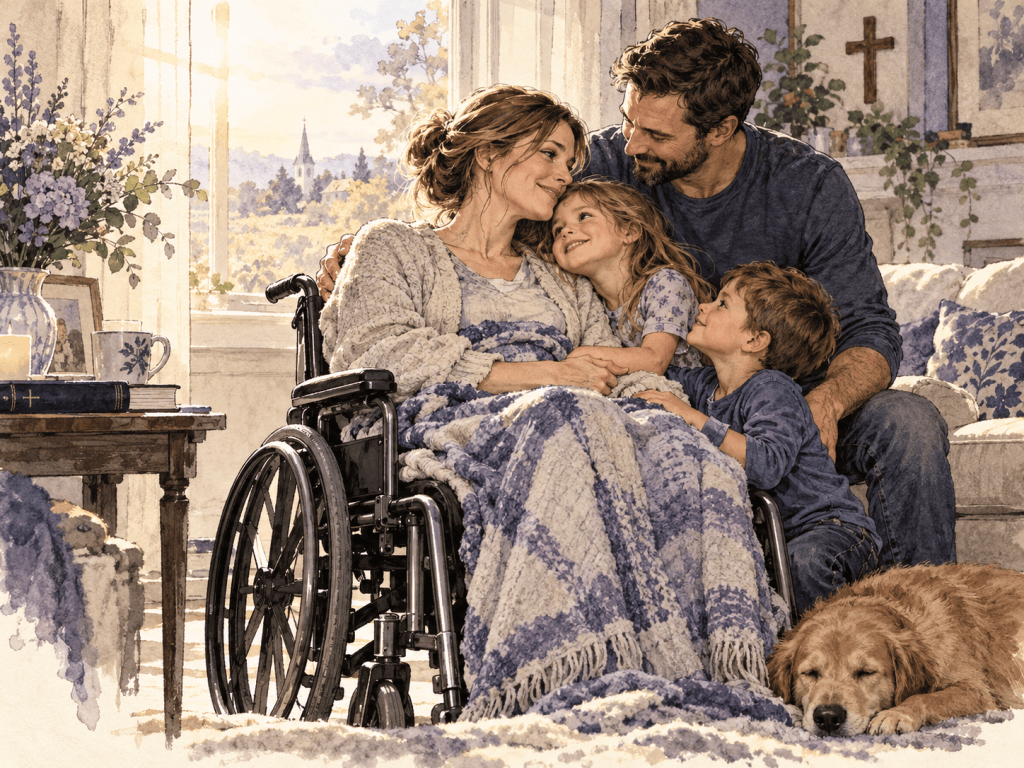
Finding faith, love, purpose, and a child’s sense of wonder in a life I never imagined living.
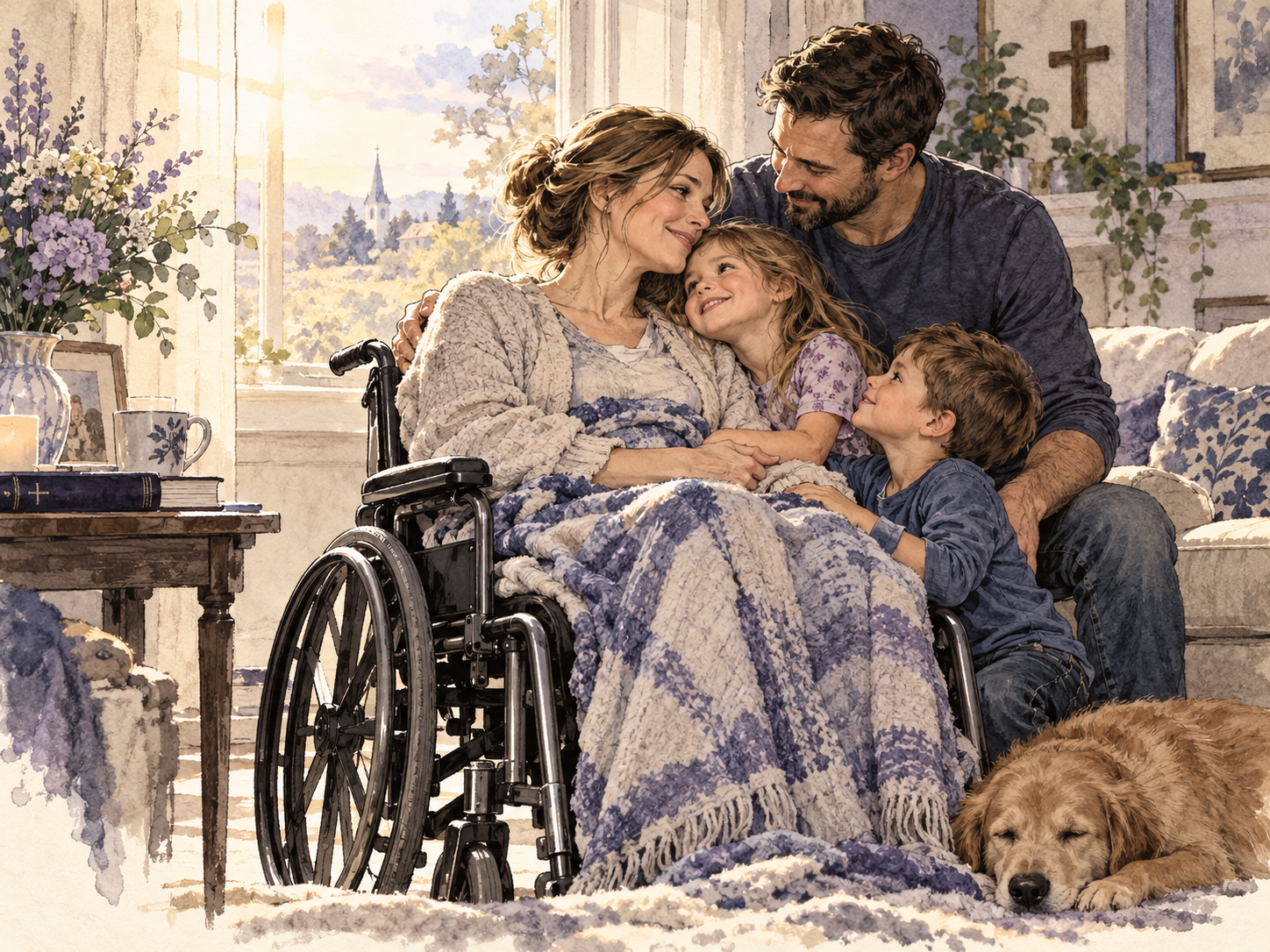
There are a thousand things I could tell you about what being sick has taken from me. My independence. My career. My ability to do things most people never have to think twice about. The simple privilege of waking up in the morning and assuming my body will cooperate with whatever plans I have made.
I could tell you about the pain, the surgeries, the fear, the hospital rooms, and the moments when I wasn’t sure I would get to watch my children grow up. And I’ve written about those things. I’ll probably spend the rest of my life writing about some of them.
But today, I want to write about something else. Because somewhere in the middle of all this heartbreak, something beautiful has been happening. Not because of the suffering. Certainly not because I needed to suffer to appreciate these things. But because life, in all its strange and contradictory ways, has a remarkable ability to grow something beautiful in the most unlikely places.
And sometimes I look around at the people I love and realize that, despite everything this illness has stolen, it has also revealed things I might otherwise have never gotten to see.
My Children Are Learning a Different Kind of Strength
Of all the unexpected changes in my life, watching my children grow into compassionate little humans might be the one that touches me most. They are growing up with a mother who needs help.
They have seen things I wish they never had to see. They have known fear and uncertainty at ages when I would have preferred their biggest worries to be homework, friendships, and what we’re having for dinner. That part breaks my heart.
But I have also watched something extraordinary happen. They notice things.
They notice when someone needs a hand. They recognize when somebody is struggling. They understand, in a way that many adults never seem to learn, that needing help doesn’t make somebody less deserving of dignity or respect. Compassion isn’t just something they hear about. It’s something they see practiced in our home.
And sometimes, in the smallest interactions, I catch glimpses of the adults they’re becoming. Thoughtful. Helpful. Gentle in ways that matter. Aware that the world doesn’t revolve entirely around their own needs.
I don’t want my children to feel responsible for taking care of me. That isn’t their job. Their job is to be children, to make messes, to laugh too loudly, to argue over silly things, and to enjoy a childhood that belongs to them.
But I hope they carry the compassion they’re learning into the rest of their lives. I hope they become the kind of people who notice the person struggling to open a door. Who sit beside someone who’s lonely. Who understand that helping another human being isn’t a burden or an inconvenience. It’s simply what we do for one another.
If there is one thing I hope my children take from this experience, it isn’t that life is cruel. It’s that we can choose to be kind, even when life is cruel.
I Have Seen the Best Parts of My Husband
There is something incredibly vulnerable about needing another person to help you with the most basic parts of being human. Marriage is supposed to be about loving one another through sickness and health, but I don’t think most of us really comprehend what those words might eventually ask of us.
My husband has become an incredible caregiver. I’ve watched him take on responsibilities neither of us could have imagined when we first pictured our lives together. And through it all, I’ve seen qualities in him that might never have been tested so deeply otherwise.
His determination. His ability to learn things he never expected to need to know. His willingness to step into uncomfortable, exhausting, and sometimes frightening situations because someone he loves needs him.
Caregiving is not glamorous. It is not the romanticized version of love we see in movies, where someone sits tenderly beside a hospital bed and says all the right things. Sometimes it’s exhausting. Sometimes it’s frustrating. Sometimes we’re both overwhelmed, and neither of us handles it perfectly. We’re human.
But there is something profoundly moving about watching somebody show their love through action. Not just in grand gestures, but in the repetitive, ordinary, often invisible tasks that make another person’s life possible.
I’ve learned that love isn’t always about the things someone says. Sometimes it’s about what they’re willing to do, over and over again, when nobody is watching. And I’ve seen some truly amazing things in my husband because of that.
My Mother Found a Strength I Always Hoped She Would See
One of the most unexpected gifts of this experience has been watching my mother grow. Our relationship has changed.
There is a different kind of understanding between us now. We’ve been forced to have difficult conversations, face uncomfortable truths, and navigate circumstances that have challenged both of us. And somewhere along the way, I’ve watched her find more confidence in herself. A willingness to make difficult decisions. To speak up. To recognize her own strength.
I’ve also learned to see her differently. Not simply as my mother, but as a woman with her own fears, struggles, history, and capacity for growth.
There is something beautiful about reaching an age when you begin to understand that your parents are still becoming themselves, too. We don’t stop growing just because we become adults. We don’t stop learning because we become parents. And sometimes the relationships that have existed the longest still have the most room to change.
I think we’ve both discovered parts of ourselves through this experience. And for all the things I wish had been different, I am grateful that our relationship has grown deeper.
In many ways, that has happened across my relationships. Illness has made me more aware of what matters, more willing to express love, and more conscious of how precious our time together really is.
For Every God-Awful Story, There’s a Beautiful One
I’ve experienced some truly appalling behavior within the medical system. Some of it has been so outrageous that when I tell people what happened, they look at me in disbelief. Other experiences have become so normal to me that I sometimes forget they’re outrageous at all.
I remember one particular encounter with an ICU charge nurse. There was a discussion about moving me out of intensive care and onto a regular hospital floor. Under ordinary circumstances, that probably sounds like good news. A step in the right direction. A sign that a patient is improving. But my circumstances were anything but ordinary.
My surgeon had been very clear that my case was too complex for the regular floor. In fact, during a previous hospitalization, I had already been transferred back down to intensive care after staff determined that the regular floor couldn’t adequately manage my needs. So when the subject came up again, I was understandably concerned.
I tried to explain my history. I tried to advocate for myself. I tried to make sure the people making these decisions understood that my concerns weren’t hypothetical. We had already been down this road.
But instead of feeling heard, I felt as though my questions were becoming increasingly unwelcome. The charge nurse grew hostile as I continued trying to advocate for myself. And eventually, I reached a point where I felt so uncomfortable with the situation that I began looking for another way out.
My solution was to leave the hospital early. Not because I suddenly felt wonderful. Not because all my concerns had disappeared. But because I was exhausted by the feeling that advocating for my own safety had become a battle.
I spoke with the on-call physician and convinced them to agree to an early discharge. And then something happened that I will never forget.
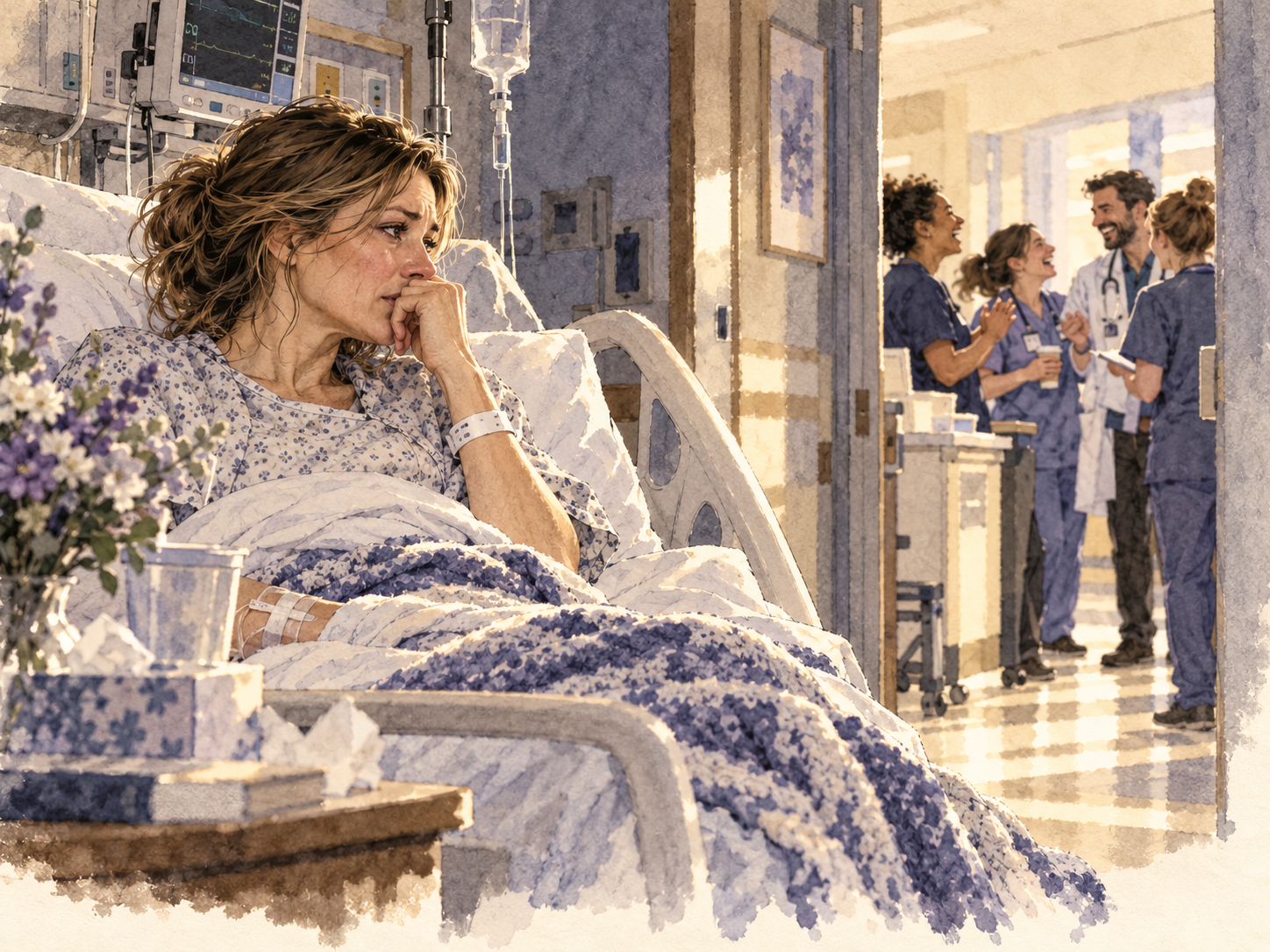
I was lying in my hospital room when I overheard staff in the hallway telling the charge nurse that I had decided to leave early. His reaction was immediate. An enthusiastic “YES!” followed by what sounded like a celebratory fist pump. Then came the laughter. Other nurses joined in.
They were celebrating. Not because I had reached some extraordinary recovery milestone. Not because I’d overcome something they thought I wouldn’t survive. But because I was leaving. Because the patient who kept asking questions, the patient who insisted on advocating for herself, was finally going to be somebody else’s problem.
And I heard every bit of it from my hospital bed. I don’t think I can adequately describe how devastating that felt.
Here I was, a woman who had already survived devastating medical complications, who had lost so much of her independence, who was still trying to navigate a frightening and complicated recovery. And the people I depended on for care were laughing about how happy they were to see me go.
I wasn’t even worth the courtesy of waiting until I was out of earshot.
What makes this story even sadder is what happened when I told my husband. He barely reacted. Not because he doesn’t care about me. But because this kind of thing has become so common in our lives that another story about medical professionals treating me poorly barely registered as unusual.
I actually had to explain to him why it was so hurtful. And somewhere in that conversation, I realized just how much our definition of normal has changed. When something happens often enough, even cruelty can begin to feel ordinary.
That realization hurt almost as much as the incident itself. Nobody should become accustomed to being treated like a burden for asking questions about their own medical care. Nobody should have to explain why hearing their caregivers celebrate their departure is humiliating. And nobody should ever feel that leaving a hospital before they’re ready is the easiest way to escape a hostile environment.
I sometimes wonder how many other patients have experienced something similar and simply didn’t have the energy, ability, or support to advocate for themselves. How many people are labeled difficult because they’re frightened? How many are dismissed because their medical needs are complicated? How many quietly stop asking questions because they’ve learned that speaking up changes the way people treat them?
These are questions that deserve attention. These are questions that keep me up at night.
But That’s Not the Whole Story
Here’s the part I don’t want anyone to forget. For every god-awful story I can tell you, I can probably come up with a beautiful one to go with it.
Because I’ve also met nurses who treated me with such extraordinary compassion that I still think about them years later. People who recognized my fear without making me justify it. Caregivers who understood that losing your independence doesn’t mean losing your dignity. Therapists who celebrated every tiny bit of progress as though we’d just won an Olympic medal.
And complete strangers who offered me kindness at moments when I desperately needed to be reminded that there was still goodness in the world. Some of these people probably have no idea how much they meant to me.… Maggie, I’m talking about you if you read this.
They were simply doing what they believed was right. But when you’ve experienced the opposite, those moments become unforgettable. A nurse who takes the time to listen. Someone who speaks to you like a person rather than a problem. A caregiver who notices you’re uncomfortable without making you feel guilty for needing help. A stranger who sees you struggling and responds with kindness rather than impatience.
Sometimes the smallest gestures can restore a little piece of the humanity that another experience has stripped away. I’ve seen the worst of what a broken healthcare system can bring out in people. But I’ve also seen the very best of what human beings are capable of. And I refuse to let the first erase the second.
I can demand accountability while expressing gratitude. I can tell the painful stories while celebrating the people who helped me through them. I can recognize that some healthcare workers caused me profound harm while others gave me reasons to keep believing in compassion. Both experiences are real. Both deserve to be acknowledged.
And perhaps one of the most important things this illness has taught me is that I get to decide which qualities I want to carry forward. I don’t want to become hardened by the cruelty I’ve experienced. I want to become more compassionate because I know what it feels like to need compassion and not receive it.
I want my children to learn that someone’s vulnerability should never be an opportunity to make them feel small. I want them to understand that kindness isn’t just about being nice when it’s convenient. It’s about how you treat people when they’re frightened, powerless, difficult to understand, or unable to do anything for you in return.
And I hope they learn that standing up for themselves doesn’t make them difficult. It makes them human. Some people helped me survive. Others made surviving harder. But both taught me something about the kind of human being I want to be.
Finding God in the Middle of Everything
Of all the relationships that have changed throughout this journey, the most important has been my relationship with God. And strangely enough, it may also be the one that has brought me the greatest peace.
I’ve spent a lot of time thinking about what it means to survive something you weren’t expected to survive. There were moments when my family was preparing to say goodbye to me. Moments when the possibility of my death was so real that preparations were being made for what my children would have left of their mother. And yet, somehow, I’m still here.
I don’t pretend to know why. I don’t claim to understand God’s plans, and I certainly don’t believe that every terrible thing that happens is some carefully orchestrated lesson we’re supposed to be grateful for. I have struggled. I’ve questioned. I’ve been angry and frightened and confused.
But somewhere along the way, my relationship with God began to change. I started feeling connected to something much greater than myself. Something that existed before me and will continue long after I’m gone. Something that makes my life feel meaningful even when I don’t understand the direction it’s taking.
There is an extraordinary kind of peace in realizing that you don’t have to understand everything to believe your life has purpose. For so long, I measured my life by what I could accomplish. The career I was building. The things I could do for my family. The independence I had worked so hard to establish. The future I thought I was creating.
And when so much of that disappeared, I struggled to understand who I was supposed to be. But my relationship with God has remained a stronghold and helped me begin separating my worth from my abilities. I am not less valuable because I can do less. My life is not less meaningful because it looks different from what I planned.
I am still a mother. A wife. A daughter. A woman with thoughts and ideas and love to give. And I am still part of something larger than myself.
I’ve begun to find comfort in the idea that perhaps my story isn’t finished simply because the chapters I expected to write have changed. Perhaps the people I encounter, the compassion my children are learning, the relationships being strengthened, and even the words I’m beginning to put back into the world are part of something whose full meaning I may never get to see.
I don’t need to know exactly what that bigger plan looks like. I find peace simply believing there may be one. And that peace has changed the way I carry my suffering. It hasn’t taken away the pain. It hasn’t answered every question. It hasn’t made the hard days disappear. But it has given me something steady to hold on to when everything else feels uncertain.
There are moments now when I feel an overwhelming gratitude simply for being alive. For the opportunity to love my children another day. To experience another sunrise. To laugh with my husband. To hear my mother’s voice. To write another sentence.
Sometimes I find myself sitting quietly, feeling connected to a greater spirit than myself, and realizing that for once I don’t need to be doing anything. I don’t need to prove anything. I don’t need to accomplish something extraordinary to justify the fact that I’m still here. I can simply exist, and that existence can be enough.
I think that’s one of the most profound changes I’ve experienced. Before all of this, I was so often focused on where I was going that I rarely stopped to appreciate where I was. Now I find myself feeling grateful for the present in a way I never understood before.
And maybe that’s what faith has become for me. Not certainty that everything will work out the way I want. Not an explanation for all the suffering. But a quiet understanding that I am not alone in it. That my life can still serve a purpose. That even when I cannot see the path ahead, there is something greater than me worth trusting.
I don’t thank God for what happened to me. I thank Him for helping me find beauty in a life I once feared was over.
Finding My Writing, and Finding My Voice Again
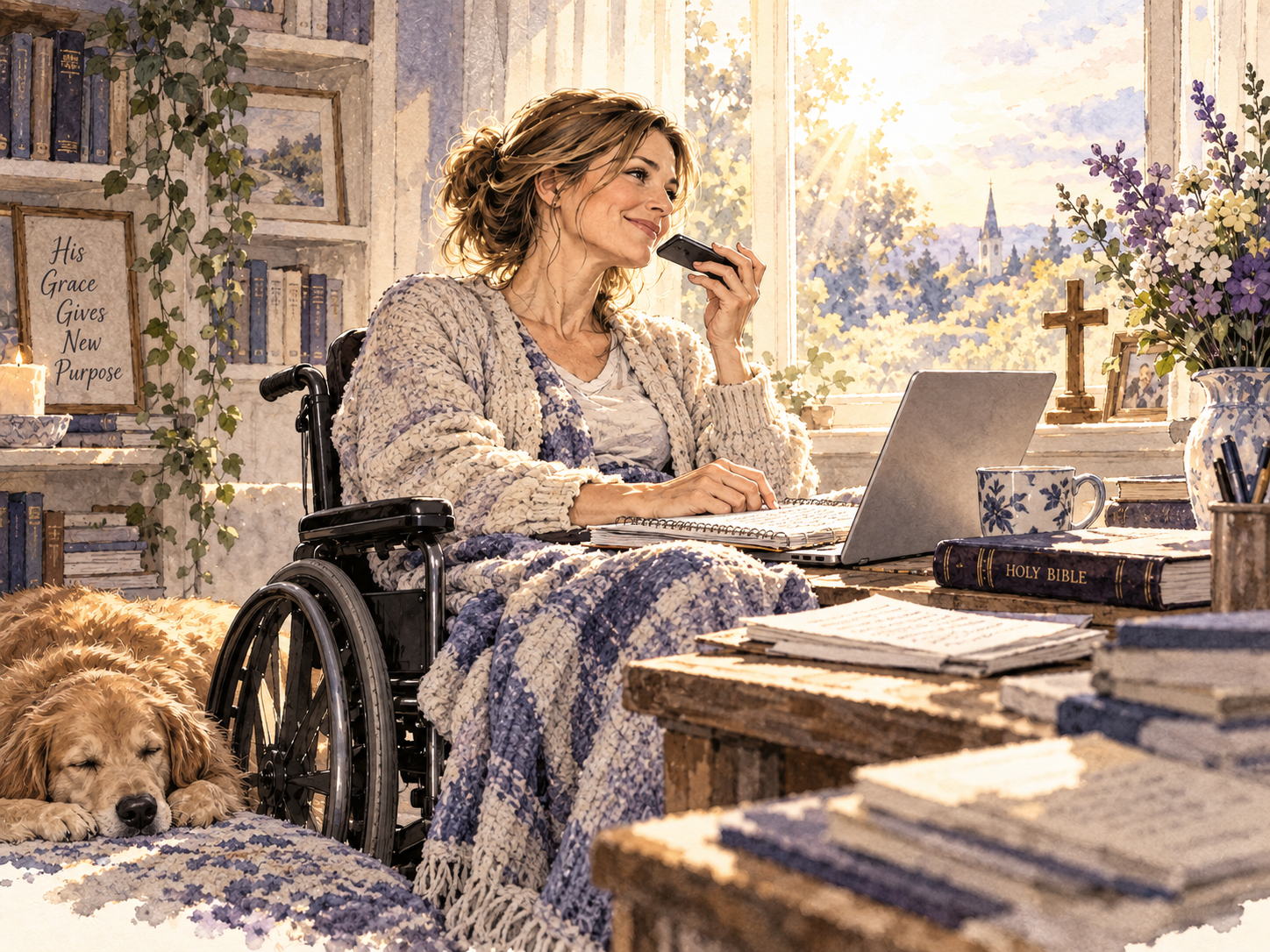
There’s another part of myself I’ve been slowly rediscovering through all of this. My writing.
For as long as I can remember, words have been a way for me to understand the world. Writing was how I organized my thoughts, explored my feelings, made sense of things that confused me, and gave shape to ideas that otherwise seemed impossible to untangle. It was part of who I was.
And then, almost overnight, even that became difficult. When I became quadriplegic, I lost the ability to simply pick up a pen and write down what I was thinking. Something I had done so naturally, without giving it a second thought, suddenly became one more thing I couldn’t do. And my voice was affected, too.
There is a special kind of frustration that comes from having an entire world of thoughts inside your mind and struggling to get them out. I know what I want to say. I can feel the words forming. But sometimes getting them from my mind into the world is an exhausting process.
Even now, speaking enough to put my experiences into writing can be difficult. Technology has helped. Voice-to-text has given me a way to begin reclaiming something that once felt lost. But it isn’t always simple. Sometimes the words come out wrong. Sometimes the software misunderstands me. Sometimes I lose my train of thought while trying to correct a sentence. And sometimes I’m simply too tired to keep talking.
There is something deeply ironic about having so much more to say than ever before while finding it physically harder than ever to say it. But gradually, one sentence at a time, the words have started coming back. And with them, a part of myself I thought I might have lost forever.
I’ve rediscovered how much I love telling stories. I’ve found myself researching, questioning, exploring ideas, and writing about things that matter to me. I’ve started using my experiences to advocate for people who might not have the ability, resources, or support to speak up for themselves. And I’ve begun to realize that maybe my voice has a different kind of power now.
Before I got sick, I could write because I loved writing. Now, sometimes, I feel as though I have to write. Not because anyone is making me. But because I’ve seen things I don’t want forgotten. I’ve witnessed extraordinary kindness and devastating indifference.
I’ve seen what happens when a person loses their independence and how easily the world can begin treating them as though they’ve lost their humanity along with it. And I’ve also seen how much difference one compassionate person can make. I want to tell those stories. I want to ask uncomfortable questions.
I want to challenge the systems that need changing and celebrate the people who remind us what humanity is supposed to look like. I want to create things that outlive the circumstances that inspired them. And maybe, somewhere in all of that, I can turn some of what I’ve experienced into something useful for someone else.
Not a justification for my suffering. But a purpose I can choose to give it. My body may have changed the way I communicate, but it hasn’t taken away the things I have to say.
In some ways, I think I’m only beginning to discover them. And when I think about my growing relationship with God, I can’t help wondering whether this rediscovered voice might be part of that greater purpose I’ve been searching for. I don’t know what it will become. But for the first time in a long time, I’m excited to find out.
Learning to See the World Like a Child Again
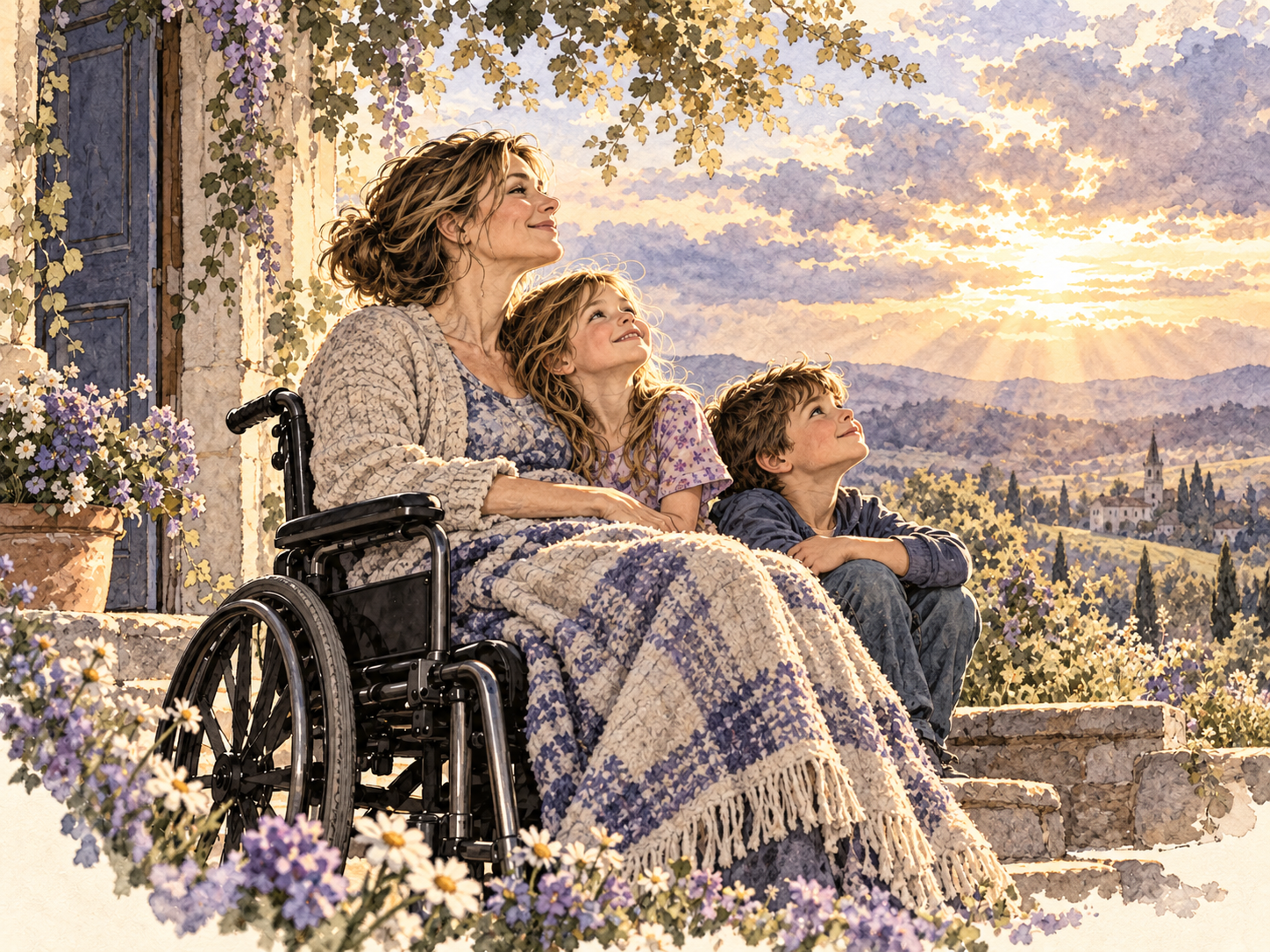
Perhaps the strangest gift of all has been the way I experience life itself. I don’t think I understood how extraordinary ordinary life was until I nearly lost it. When you’ve come close enough to death that your family begins preparing for the possibility of a world without you, something changes.
You stop assuming tomorrow is guaranteed. And suddenly, the smallest things become almost impossibly beautiful. Sunlight coming through a window. The sound of my children laughing in another room. The way the air feels before a storm. A bird sitting on a branch. A conversation with someone I love.
Watching my children do something completely ordinary and realizing that, for a time, I wasn’t sure I would ever get to witness moments like these again. I find myself staring at things now. Really looking at them.
Sometimes I wonder if this is how children experience the world before we teach them to hurry through it. Before everything becomes a schedule, an obligation, a distraction, or another thing to cross off a list. Children can find an entire universe in a puddle of water. They can marvel at a butterfly or spend twenty minutes examining a rock.
At some point, most of us lose that. We become so consumed with living our lives that we forget to experience them. And somehow, after all of this, I feel as though I’ve been given a little piece of that wonder back.
I notice the colors in the sky. The sound of rain. The warmth of someone’s hand. The extraordinary miracle of simply being here. Things that once would have passed without a second thought can now stop me in my tracks. I know how fragile it all is. And that makes it breathtaking.
I sometimes wonder whether people who have never stood so close to losing their lives can fully understand this feeling. Not because they don’t appreciate what they have, but because there is a particular kind of wonder that comes from almost never seeing any of it again.
It’s a terrible price to pay for a beautiful perspective. And I would never suggest anyone should have to pay it. But I cannot deny that the world looks different to me now. And there is something sacred about that.
Two Things Can Be True
I think we sometimes feel pressure to turn every hardship into an inspirational story. To find the lesson. To identify the blessing. To make suffering mean something so that it becomes easier for other people to understand. But I don’t think life works that way.
I can be grateful for the compassion growing in my children and still grieve the childhood experiences my illness has changed. I can admire the extraordinary caregiver my husband has become and still wish he’d never had to carry that responsibility.
I can celebrate my mother’s growing confidence while wishing our family had learned some of these lessons under gentler circumstances. I can feel closer to God and still have questions about why things happened the way they did. I can celebrate the return of my writing and still grieve the simple ability to hold a pen.
And I can look at the world with childlike wonder while still mourning the body and the life I once had. None of those feelings cancels out the others. Gratitude doesn’t erase grief. And grief doesn’t make gratitude any less genuine.
Maybe that is one of the most important things I’ve learned. Life doesn’t have to be perfect to be beautiful. It doesn’t even have to be fair. Sometimes beauty and heartbreak exist in the exact same moment.
Sometimes the same experience that nearly destroys you also reveals just how much love surrounds you. And sometimes the greatest changes aren’t the ones happening inside your own body. They’re happening in the hearts of the people around you.
What I Hope My Children Remember
Years from now, when my children are grown, I hope they don’t remember this chapter of our lives only through the lens of illness. I hope they remember laughter. I hope they remember that we found reasons to celebrate even when things were hard.
I hope they remember watching their father show up for the people he loves. I hope they remember seeing their grandmother grow stronger. I hope they remember that their mother still found joy in the world, even when her body made experiencing it more difficult.
And I hope they understand that compassion is not weakness. It is one of the greatest strengths a human being can possess. More than anything, I hope they learn to see the world with the same wonder I have rediscovered.
Not because they’ve suffered. But because they understand how precious life is.
I hope they know that their mother was never grateful for the things that hurt her. But she was deeply, profoundly grateful for the love that surrounded her.
I used to think the greatest tragedy of getting sick was discovering how much life could take from me. But somewhere along the way, I also discovered how much people could give.
My children gave me a reason to keep looking forward. My husband showed me love through service. My mother showed me that we are never too old to grow. Strangers showed me that kindness still exists in unexpected places. And God helped me find wonder in a world I almost had to leave behind.
None of that makes what happened to me okay. But it does mean that what happened to me isn’t the whole story.
I have seen some of the worst things human beings can do to one another. And somehow, I have also been privileged to witness some of the very best.
If I get to spend the rest of my life telling both kinds of stories, I think that’s a life worth living.
Explore related resources: ADA accessibility and civil rights · Medicare Care Compare · BibleGateway.


Leave a Reply