There is a particular kind of helplessness that comes with being unable to use your own body. I know that helplessness intimately. But there’s another kind of helplessness I find almost equally disturbing.
It’s when you can communicate what you want, and the people responsible for your care decide your voice doesn’t matter.
After surviving a brain abscess, prolonged ventilation, and becoming quadriplegic, I thought the hardest part would be rebuilding my life. I wasn’t prepared for how much of that fight would involve convincing people that my body still belonged to me.
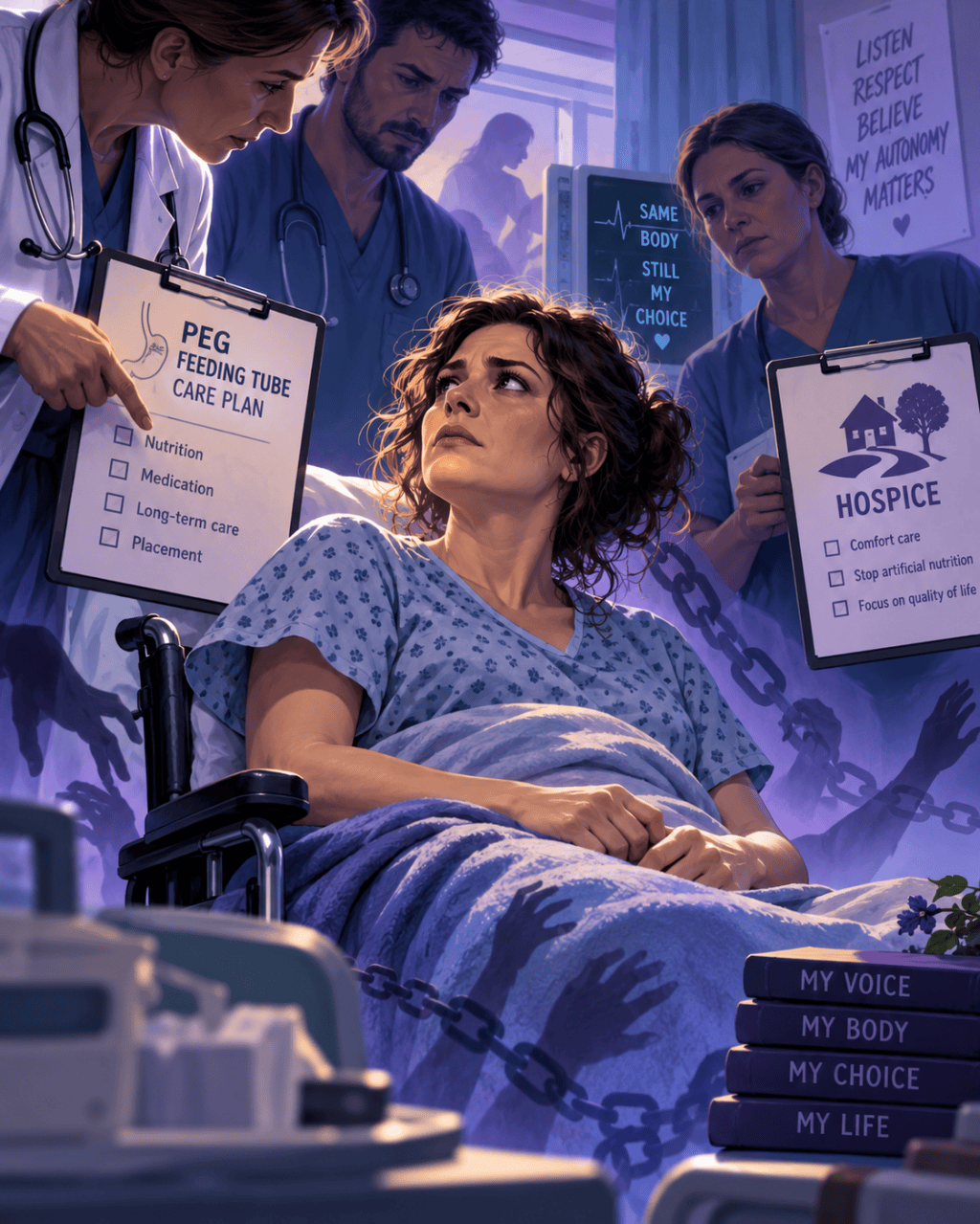
A Feeding Tube or Hospice. Those Were My Choices.
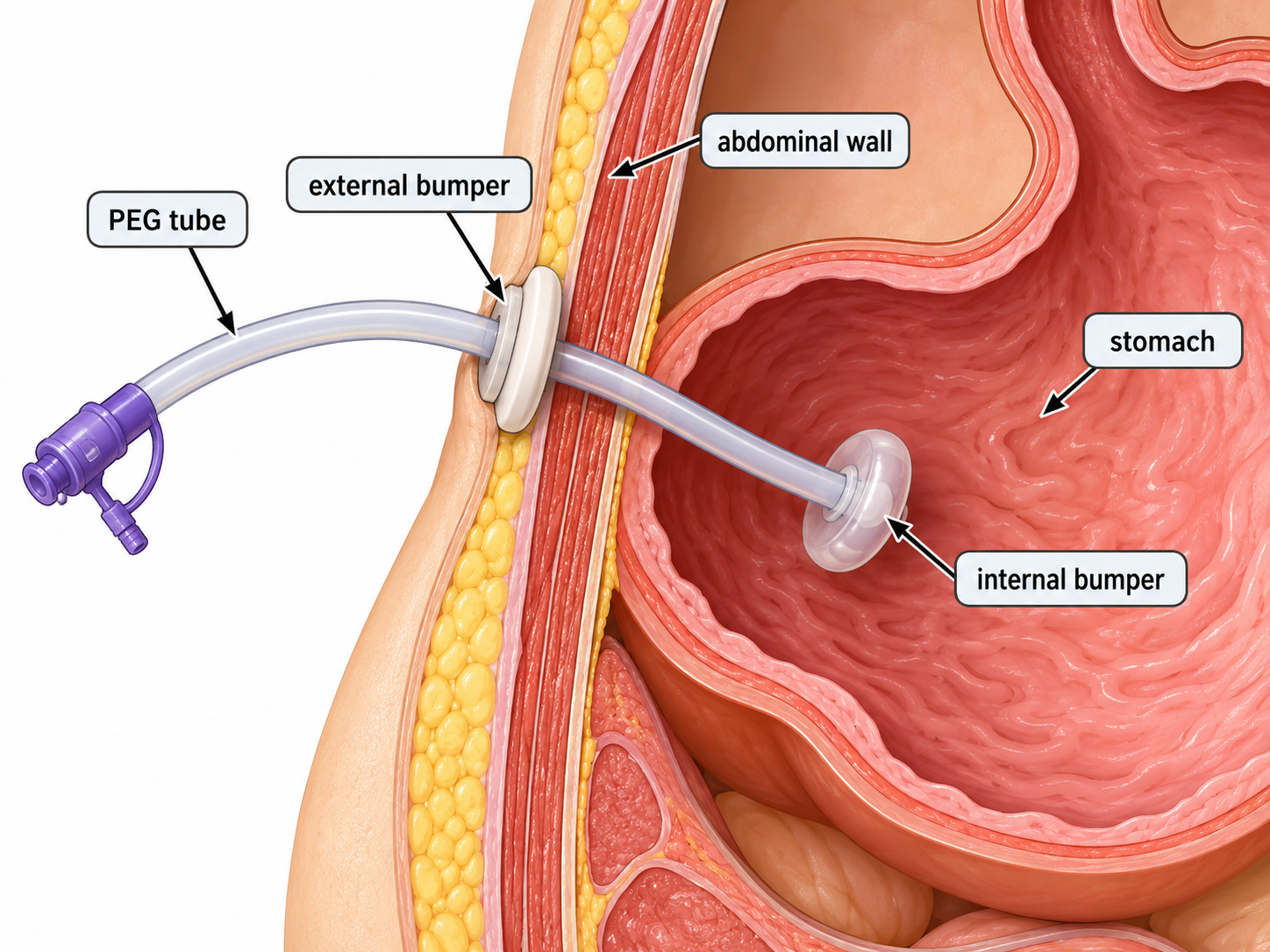
In 2025, I was told I needed a PEG feeding tube because I was supposedly silently aspirating—meaning food or liquid could enter my airway without triggering a cough.
One doctor wanted me to use the tube for 12 months, with absolutely nothing to eat or drink by mouth. An entire year without meals with my family. Without enjoying food. Without even a sip of water.
And the alternative presented to me? Go home with hospice care.
The previous year, I had nearly died. My family had prepared for the possibility of losing me, including a hospice memory box for my children. Those experiences were brought into the conversation.
My respiratory history was described using numbers I believe were inaccurate. I was reminded that my doctors didn’t want to lose me and that my family certainly didn’t want to lose me either.
Imagine being a mother who has already nearly died and being reminded of that trauma while deciding whether to accept another invasive medical procedure.
I felt as though I was being asked to prove how badly I wanted to stay alive for my children. That’s a powerful position to put a vulnerable patient in.
Then I Learned Something That Changed Everything
Here’s the part that still astonishes me. I never used my feeding tube for feeding. Not once.
I used it for medications because my swallowing evaluation had identified mild difficulty taking them. But that problem was later addressed by taking appropriate medications with applesauce or yogurt instead of water.
My home rehabilitation therapist subsequently told me that my swallowing study did not warrant a PEG tube. Later, a separate inpatient rehabilitation assessment also supported the conclusion that the tube was unnecessary.
And the respiratory illness occurring around that time? My chest X-ray had been clear, and I ultimately learned I had a coronavirus infection—not COVID-19.
To be clear, a clear chest X-ray doesn’t rule out silent aspiration, and a feeding tube can sometimes be necessary for reasons beyond swallowing difficulties. But those facts left me with serious questions.
What objective evidence justified a year without eating or drinking? Why was hospice presented as the alternative? And why did subsequent rehabilitation assessments question a procedure I had been told was necessary?
If the medical evidence was strong enough to justify the procedure, why did I feel that my fear of dying was doing so much of the convincing?
The Consequences Didn’t End With the Procedure
Getting the PEG tube placed wasn’t the end of the ordeal. I was left dealing with complications, including an infection requiring antibiotics and a painful tube-removal experience.
But one of the most frustrating consequences was how it interfered with my recovery. The PEG tube prevented me from participating in aquatic therapy, costing me 60 days of valuable rehabilitation.
For someone recovering from quadriplegia, those aren’t just missed appointments. They’re opportunities to rebuild strength, mobility, and independence.
I never used the tube for feeding, yet it cost me precious time in a recovery where every opportunity for progress matters. And that is perhaps the cruelest irony: a procedure presented as necessary to protect my health ended up creating additional barriers to my rehabilitation.
When the Unthinkable Becomes Ordinary
Sometimes I forget that my life is shocking to other people. I’ll casually mention the feeding tube, the painful removal experience, or the endless negotiations over what happens to my body. And then I’ll see someone’s expression change. Wait. They did what?
For a moment, I remember that none of this is supposed to be normal. But somewhere along the way, it became normal to me.
I’ve become accustomed to strangers handling the most intimate parts of my body.
Accustomed to anticipating pain before medical appointments.
Accustomed to having my body discussed as though I’m not even in the room.
Accustomed to needing assistance with things most people wouldn’t think twice about.
Accustomed to asking permission, requesting help, and explaining myself just to participate in everyday life.
And perhaps most disturbing of all? I’ve become accustomed to things that would absolutely horrify me if they were happening to someone I loved.
I think this is one of the greatest divides between able-bodied and disabled people. Not necessarily a lack of compassion, but an enormous difference in what we experience as normal.
Think about how many aspects of your life you never have to negotiate. Getting out of bed. Going to the bathroom. Eating dinner. Leaving your house. Hugging your children. Deciding who gets to touch your body.
For many disabled people, these aren’t necessarily simple, private decisions anymore. They can involve caregivers, medical professionals, insurance companies, accessibility barriers, or someone else’s availability.
What one person considers a basic freedom, another person has to schedule, justify, or fight for.
I can describe experiences that leave other people speechless with the same matter-of-fact tone someone might use to describe a trip to the grocery store. Not because they weren’t traumatic. Not because they didn’t hurt. But because you can’t live every day in a state of shock over the circumstances of your own life.
Eventually, the extraordinary becomes routine. And that’s what frightens me. How many disabled people have become so accustomed to negotiating their independence that we’ve stopped questioning why so much of it has to be negotiated in the first place?
Just because we’ve learned to live with something doesn’t mean society should expect us to accept it without question.
Consent Is More Than a Signature
Medical consent is supposed to mean understanding your options, their risks, and their alternatives—and having the freedom to make a decision. But how voluntary does a decision feel when the alternatives presented are an invasive procedure or hospice?
How freely can you choose when your previous near-death experiences and your family’s fear of losing you become part of the conversation? Doctors have a responsibility to explain legitimate medical risks. But there’s a difference between explaining those risks and making someone afraid to choose anything else.
For disabled patients, that distinction is especially important. Needing help moving my body doesn’t mean needing someone else to make my decisions. Having difficulty speaking doesn’t mean having difficulty understanding.
And being physically unable to resist an intervention doesn’t mean consenting to it.
I Survived. That Doesn’t Mean I Surrendered.
I am profoundly grateful to be alive. I understand the value of modern medicine more intimately than most people ever will. But gratitude for survival should not require silence about the care that followed.
I can appreciate medical expertise while questioning decisions made about my body. I can acknowledge that a doctor may have genuinely believed they were protecting me while still demanding an explanation for the medical evidence and the way my options were presented.
And I can recognize that my experience raises serious concerns about medical coercion without pretending I have every answer.
I was told to give up eating and drinking for a year. I never used the tube for feeding. Yet I was left dealing with its complications, including an infection and the loss of valuable rehabilitation time.
My quadriplegia took away much of my physical independence. It did not take away my intelligence. It did not take away my ability to make decisions. And it did not take away my right to bodily autonomy.
My body is not a democracy. The people in the room do not get to vote on whether my wishes matter.
I am the person who has to live with the consequences. And my voice should never be the easiest one to ignore.
Author’s note: This essay reflects my personal experience and concerns about informed consent and bodily autonomy. Feeding tubes are lifesaving for many patients. My questions concern the necessity of this particular intervention, how its risks and alternatives were presented, and the subsequent clinical assessments that questioned its use.


Leave a Reply