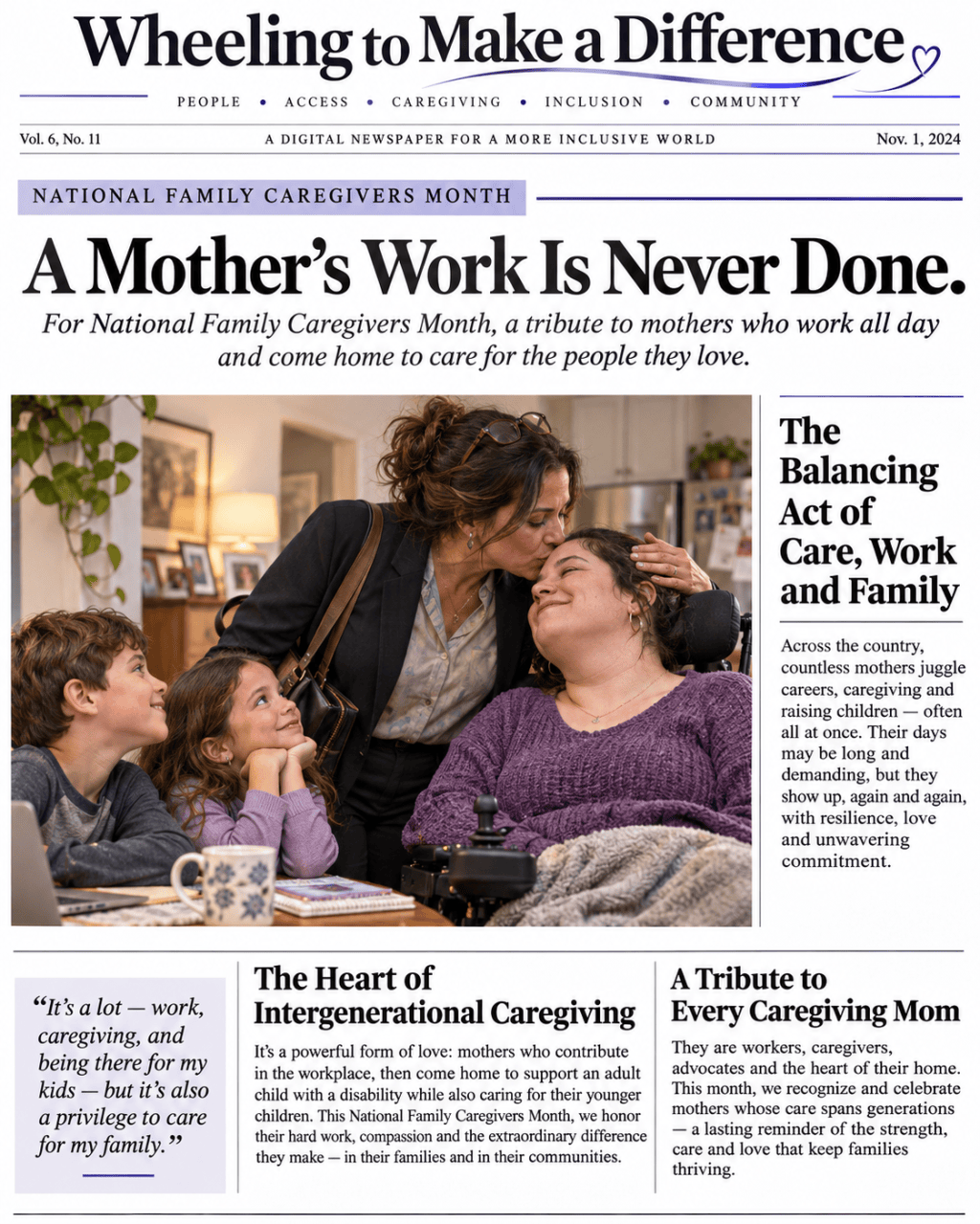
For National Family Caregivers Month, a tribute to my mother, who works a full-time job and then comes home to care for me and my children.
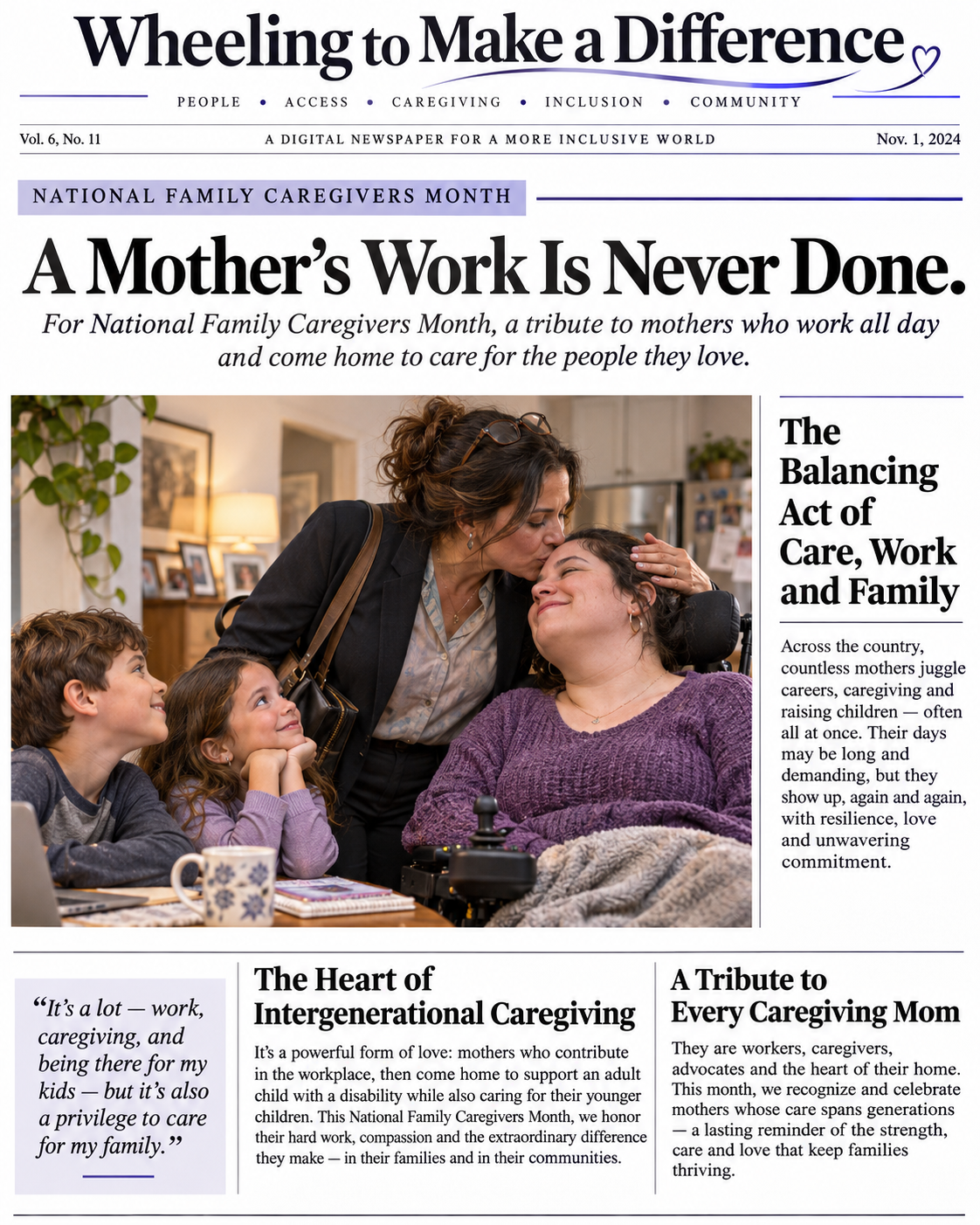
There is an old saying that a mother’s work is never done. I used to think it was something people said when they were tired of doing laundry. Now, watching my own mother, I realize it may be the most accurate—and slightly concerning—description of motherhood ever written.
My mom, Jacque, works a full-time job. She gives an entire day of her time and energy to her work. Then she comes home—not to a quiet evening with nothing left to do, but to me, to my children, and to another round of needs and responsibilities.
For most people, coming home means the workday is ending. For my mother, it means her second shift is beginning.
When Your Mother Becomes Your Caregiver Again
There is something deeply complicated about growing up, having children of your own, building a life, and then finding yourself needing your mother in ways you never imagined. I expected to be the one running around with my kids, managing the chaos and occasionally calling my mom to complain about how exhausting motherhood can be.
Instead, my progressive neurological condition changed what my body could do. Quadriplegia took away much of my physical independence. It did not take away my identity as a mother, but it changed how I can participate in the everyday work of parenting.
That’s where my mom comes in. She isn’t simply helping her daughter. She’s helping her daughter continue being a mother to her own children. She isn’t replacing me. She is supporting the family life that I still want to be fully part of.
Motherhood Doesn’t End at Eighteen
Millions of families know something about this kind of caregiving. The AARP and National Alliance for Caregiving’s Caregiving in the U.S. 2025 report suggests approximately 3.5 million Americans are caring for an adult son or daughter with a disability or medical condition. That’s an estimate based on the report’s adult-caregiver population and relationship breakdown, rather than an exact count of mothers or of physical disabilities.
Texas has an estimated 5.3 million family caregivers overall, according to AARP’s state caregiving research. That figure includes many caregiving relationships, not just parents of adult children.
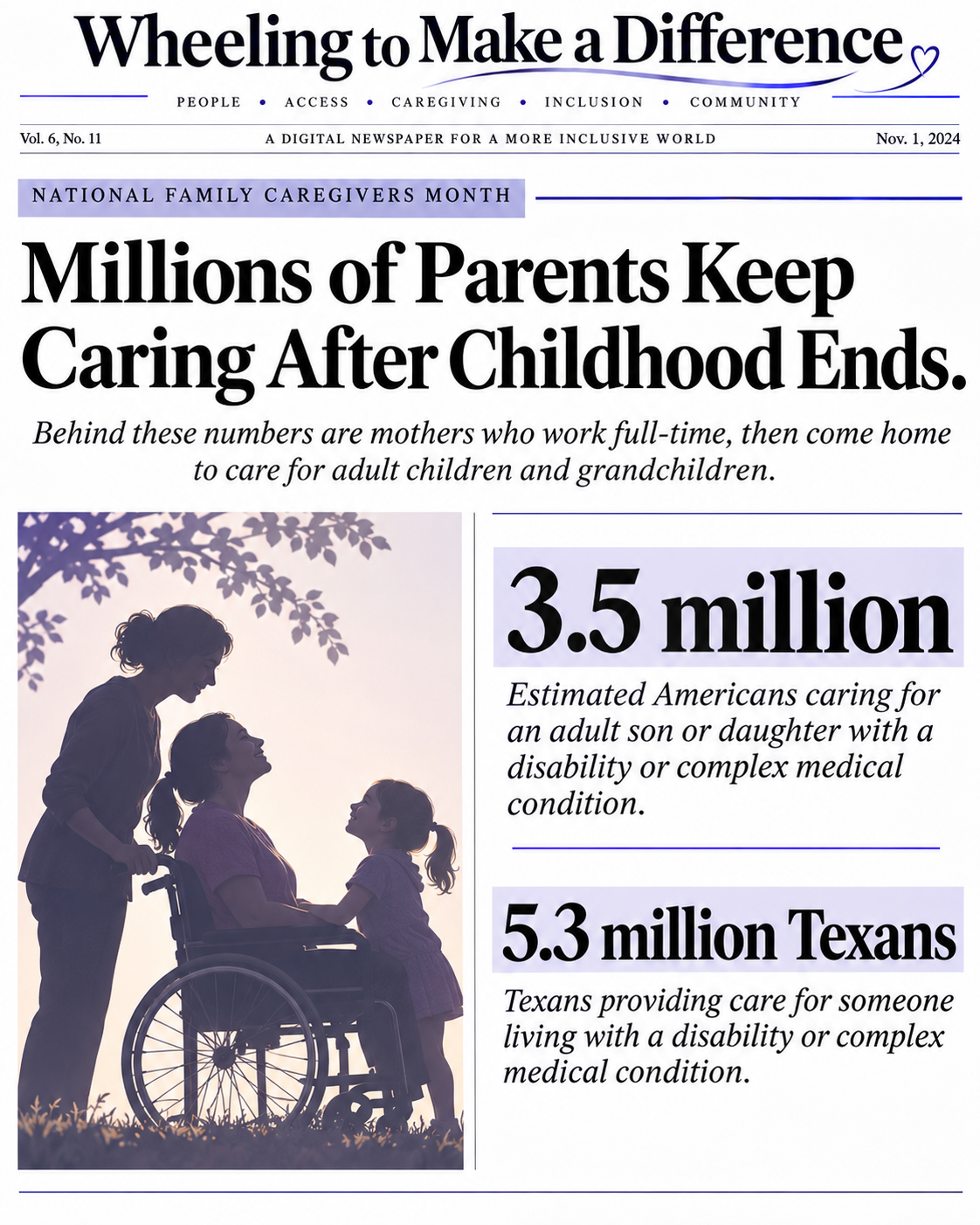
My mom is one of the people behind those numbers. She already raised me. Now she works all day and comes home to help care for me and my kids. Statistics can’t measure how many evenings she’s given up, how many plans she’s rearranged, or how it feels to know the people you love still need you when you are exhausted.
The Woman Who Doesn’t Get to Clock Out
We talk a lot about the sacrifices mothers make when their children are young: sleepless nights, school schedules, appointments, laundry. We talk much less about the mothers still doing that work when their children are adults.
My mother has her own life, her own interests, responsibilities, and dreams. She deserves time to herself. She deserves an evening when she can come home, put her feet up, and have nothing demanded of her.
We love calling mothers superheroes. It’s a lovely compliment and, at times, a convenient way of avoiding the question of whether we’re giving them enough help. Strength should be something we admire in caregivers, not something we demand from them every minute of every day.
Three Generations, One Family
One of the hardest parts of becoming disabled has been rethinking the kind of mother I expected to be. There are ordinary things I miss doing on my own. My mom sees those limitations up close. She also sees the emotional weight of navigating a life that changed dramatically.
Through all of it, she continues to be my mother and my children’s grandmother. I am enormously grateful for what she does. I’m also aware that gratitude alone cannot buy back her time, protect her health, or guarantee our family the support we need.
She Deserves More Than a Thank-You
My mother deserves more than another speech about how selfless caregivers are. She deserves legislation that helps give families what they need to keep them happy and healthy.
That means real access to affordable home healthcare, respite services, paid family leave, accessible transportation, and medically necessary rehabilitation. It means policies that don’t force families to choose between earning a living, protecting their own health, and caring for the people they love.
It also means recognizing that people with disabilities deserve independence and the chance to parent, work, and participate in family life. Supporting disabled people and supporting their caregivers are not competing goals. They’re part of the same solution.
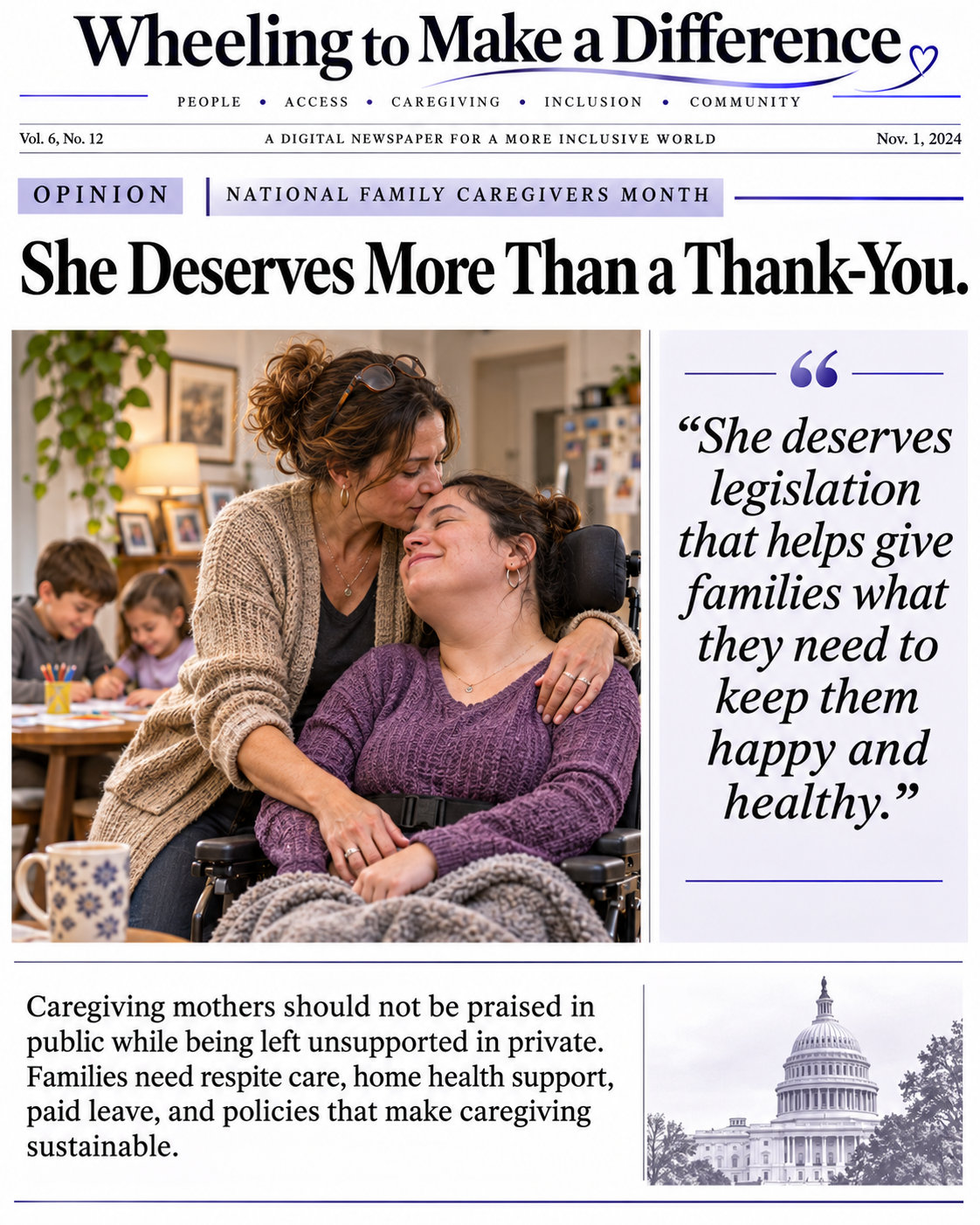
Lawmakers need to stop treating family caregivers as an unlimited, unpaid resource that will always be there to pick up the pieces. Families deserve more than survival. They deserve the resources and support to build happy, healthy, fulfilling lives.
Mom, I See You
Mom, I see the fact that you work all day and still come home ready to help. I see the responsibilities that don’t disappear just because you’re tired. And I know there is a whole person behind everything you do for us: a woman who deserves to be cared for, too.
I wish our circumstances were different. I wish I could give you more rest, more freedom and fewer things to worry about. But needing your help has never made me forget what you’re giving.
You raised me. Now, in a chapter of life neither of us could have predicted, you’re helping me raise my children. I don’t take that lightly.
I don’t just appreciate everything you do for us. I appreciate you. Not just as my mother, my caregiver, or my children’s grandmother, but as the woman who exists beyond those responsibilities.
This National Family Caregivers Month, let’s do more than thank mothers for how much they sacrifice. Let’s demand policies that allow them—and the families they love—to thrive.
A mother’s work may never be done. But that doesn’t mean she should have to do it all.
Dedicated with love to my mom, Jacque. — Wheeling to Make a Difference, November 2026


Leave a Reply